Perhaps Attacking Oil Facilities and Oil Producing Nations Might Be A Trend?

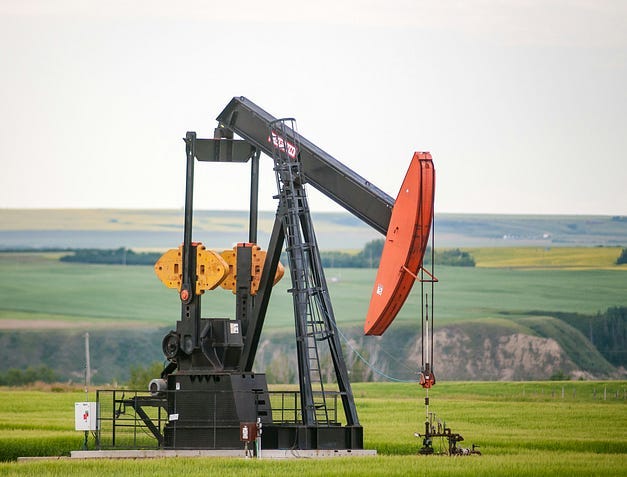
Ukraine is currently taking aim at Russia’s oil processing plants. The reason for this seems perfectly understandable, until one takes a larger look at what is going on. There is nothing so unusual about a country that was invaded by another country trying to destroy military assets of the invader. But let’s zoom out for a bit to see if there is a trend we are somehow missing amidst the stream of narratives that floods our country’s understanding of what is going on in the world.
It wasn’t just Russia’s oil that was attacked. Early on in the war in Ukraine, their gas pipelines that would have provided much of Europe’s energy requirements were destroyed by unnamed sources. Official narratives originally pointed the finger at Russia, as if Russia had an interest in blowing up their own pipelines and ceasing the flow of money that would enter into Russia in return. Years later, the official narrative pointed the finger at Ukraine, as if Ukraine had the technology to blow up pipelines deep under a sea that was over a thousand kilometers from their border. It cannot be seriously believed that Ukraine was the culprit in the destruction of Nord Stream pipelines and it ought not even be unseriously suggested that it could be done by Ukraine without considerable assistance from the United States.
Well, okay then, but what does that prove? After all, the U.S. is only trying to defend democracy by giving material aid to Ukraine as their young democracy struggles to endure in the face of the Russian onslaught. But let’s zoom out a little wider and see if some larger trend is being repeated. Something that might link both gas and oil into a bigger picture. Hmm, I wonder what those two might have in common and if the U.S. has any history of attacking other countries’ fuel production?
Well, there was Venezuela. Venezuela has the largest oil reserves on the planet, which ought to make them an extremely prosperous nation capable of providing aid to its allies and neighbors that are being sanctioned by the U.S. and starved of energy, among other things. Decades of U.S. sanctions on Venezuela after their government decided to take control of their own natural resources has plunged Venezuela from a top oil producer to a bit player. I see a bit of a trend developing, but might there be more examples to back that up?
For nearly two decades, The United States has been either sanctioning Syria, assisting ISIS-related terrorists in combatting the Assad government in Syria, or doing both simultaneously. Somehow along the way the U.S. managed to acquire control of Syria’s oil fields. That happened in 2014 and it continues to this day, even though the U.S. finally got its wish late in the Biden administration and managed to supplant President Assad with somebody who was once the second in command of al Qaeda in Iraq. Despite his rebranding and renaming in order to make him the poster boy for a vibrant new democratic Syria, the oil fields have not been given back to the people who live in that country and for whom much concern was once expressed.
Speaking of Iraq and people who don’t have control over the very oil that lies beneath their feet, some of you may be old enough to remember our war against Iraq in order to establish democracy and rid the world of weapons of mass destruction. We have managed to institute the same kind of democracy in Iraq which we promote throughout the free world, the kind where they are free to elect anyone to power they choose, so long as we approve of them. As far as eliminating Saddam Hussein’s weapons of mass destruction, we have been so successful that in over two decades no one has been able to discover any evidence of them ever existing. To this day, Iraq is required to sell its oil in U.S. dollars, the proceeds going directly to the Federal Reserve of New York, where they are subject to U.S. oversight.
Libya is the largest oil producer in Africa. Once upon a time they had a wicked leader who nationalized the oil revenues and provided ordinary Libyans with free housing, healthcare, and education. Then, in an instance of poetic justice, Muammar Gaddafi tripped and accidentally fell upon a bayonet which repeatedly found its way in and out of his rectum. Secretary Of State Hillary Clinton had quite the giggle over this. In fact, it was her signature foreign policy success. Thereafter, the Libyan people have been subjected to many natural disasters that might have been averted if they only had a government willing to spend money on necessary infrastructure such as dam maintenance.
Prior to America’s successful elimination of Iraq’s weapons of mass destruction, they were also quite successful eliminating hundreds of thousands of Iraqi children, through sanctions that prevented essential medicine and food from reaching them. Secretary of State Madeline Albright, showing considerably more restraint than Secretary of State Hillary Clinton, did not giggle as she said that the price of killing even a half-million children was a hard choice but worth it.
Iraq was sanctioned for over a decade for the crimes of its ruthless dictator, Saddam Hussein. In fact, they were sanctioned soon after Hussein stopped using chemical weapons against Iran, weapons for which the U.S. provided the necessary chemicals. Like the weapons of mass destruction Iraq undoubtedly had in the 2000s, any mention of the chemical weapons used by Iraq against Iran with our blessing was utterly eliminated within the U.S. press. Chemical weapons would not be mentioned again for another decade or two, when it served as a convenient excuse for bombing Syria, whose chemical weapons were also never discovered after the fall of the dictator who, without question, had vast stores of them.
While Venezuela, Iraq, and Syria were heavily sanctioned for nearly two decades, Iran has been undergoing sanctions for 46 years. Like Venezuela, you might not think Iran has vast oil reserves that the U.S. might be interested in. But that’s only because 46 years of sanctions does have an impact on the amount of oil a country is able to export.
For those of you who might not be aware, the U.S. is currently at war with Iran. The stated reason? Iran is working to develop weapons of mass destruction. In fact, they are being accused of seeking to acquire the very sort of weapons of destruction of which the U.S. and Israel has many. This is absolutely unacceptable and proof of how utterly evil the Iranian regime is. Only responsible governments, those that would never think of illegally attacking or occupying any independent and free country, are permitted to possess nuclear weapons. Countries such as England, France, Israel, and the U.S.
There are other examples of the U.S. attacking/sanctioning countries that are substantial producers of oil. In fact, it can be said that wherever there is oil there is blood spilled by the U.S. Military, the CIA, or proxy armies that engage in the most brutal of atrocities but are never reported on by the mainstream media nor sung about disparagingly in a U2 song.
The pattern is firmly establishing itself, yes. But are there exceptions that weaken the picture that is being painted? Most assuredly. Take, for example Saudi Arabia. They have massive amounts of oil and yet they have never once been attacked by the U.S. or been accused of being undemocratic. Qatar is another, as are the United Arab Republic and Kuwait. All are free and robust democracies that are never threatened with force by the U.S. And there is a good reason for that. If the U.S. were to bomb one of these nations, there would be a very good chance that they would accidentally damage one of their many military bases they have established in these countries. And they would never do that, because these military bases are instrumental in protecting freedom and democracy around the world.
If you would like to support my work or read more of it, you can find my most recent book here: https://www.amazon.com/Essays-Awakening-James-Rozoff/dp/B0FS274XXB/ref=tmm_pap_swatch_0